
Maryvale Lawn Mowing Services
Choose our lawn mowing service for reliable, professional results that keep your yard healthy, beautiful, and hassle-free all season long.
Get a Free QuoteOur Maryvale Landscaping & Yard Care Services
When to Schedule Lawn Mowing in Maryvale, Arizona – Seasonal Guide
In Maryvale, Arizona, the timing of your lawn mowing routine is crucial for maintaining a healthy, vibrant yard. The region’s unique desert climate, characterized by hot summers, mild winters, and sporadic rainfall, means that grass growth patterns differ from other parts of the country. Typically, the optimal mowing season begins in early March, after the last frost, and continues through late October. Neighborhoods near Maryvale Park and the Grand Canal Trail often experience microclimates due to varying shade coverage and soil types, which can influence mowing frequency.
Local environmental factors such as drought risk, humidity levels, and the prevalence of clay-heavy soils play a significant role in determining the best mowing schedule. For example, areas with dense tree coverage, like those near Desert West Park, may require less frequent mowing due to increased shade and slower grass growth. Additionally, homeowners should be mindful of municipal watering restrictions and seasonal precipitation patterns, which can impact both the timing and frequency of lawn care. For more information on local guidelines and resources, visit the official Maryvale community page.
Local Factors to Consider for Lawn Mowing in Maryvale
- Tree density and shade coverage
- Soil type (e.g., clay-heavy or sandy soils)
- Terrain and yard slope
- Seasonal precipitation and drought risk
- Frost dates and temperature fluctuations
- Municipal watering and mowing restrictions
- Proximity to landmarks or parks influencing microclimates
Benefits of Lawn Mowing in Maryvale
Professional Lawn Care Experts
Consistent and Reliable Scheduling
Enhanced Curb Appeal
Time and Effort Savings
Eco-Friendly Landscaping Practices
Comprehensive Yard Maintenance
Maryvale Lawn Mowing Types

Residential Lawn Mowing
-
Commercial Lawn Mowing
-
Ride-On Mowing Services
-
Slashing and Acreage Mowing
-
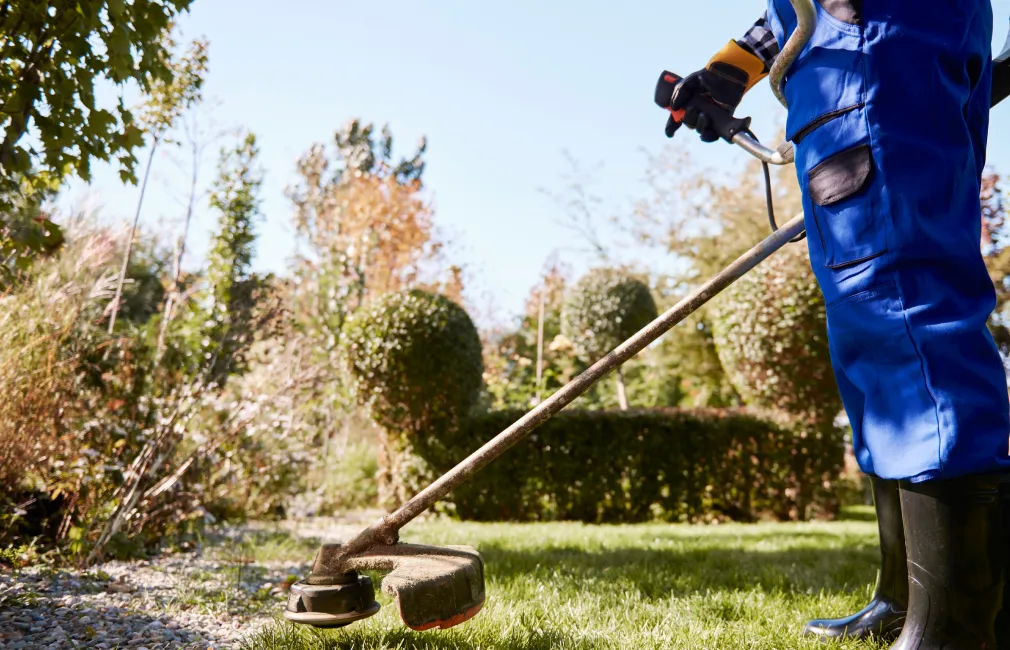
Edging and Trimming
-
Seasonal Lawn Maintenance
-
Zero-Turn Mowing
Our Lawn Mowing Process
Site Evaluation
Lawn Preparation
Mowing Execution
Edging and Trimming
Cleanup
Why Choose Maryvale Landscape Services
-
Maryvale Homeowners Trust Us
-
Expert Lawn Maintenance
-
Reliable Scheduling
-
Competitive Pricing
-
Professional Team
-
Satisfaction Guarantee
-
Personalized Service
Coordinating Lawn Mowing Services with Maryvale's Municipal Programs and Departments
Maryvale is an urban village within the City of Phoenix, and all lawn mowing operations on residential and commercial properties fall under Phoenix municipal oversight. Property owners and managers should be aware that grass clippings, green waste, and organic debris generated during mowing must be managed in accordance with the city's solid waste and stormwater protocols. Phoenix Public Works oversees curbside green-waste collection and bulk pickup scheduling; residents should verify current collection days and container requirements directly with the department before placing clippings or bagged waste at the curb. Clippings must never be swept or blown into street gutters, curb inlets, or storm drains, as these discharge into the city's Phase II MS4 stormwater system without treatment.
- Bag or mulch-mow all clippings to prevent material from entering the public right-of-way
- Confirm bulk green-waste pickup schedules through Phoenix Public Works before setting out large volumes
- Keep mowing debris away from retention basins, washes, and drainage channels adjacent to Maryvale properties
Phoenix Public Works
200 W. Washington St., Phoenix, AZ 85003
Official Website: Phoenix Public Works
Properties adjacent to parks or public landscape corridors should also note that Phoenix Parks and Recreation maintains turf standards on municipal land; private mowing crews must not encroach on city-maintained parkway strips without coordination.
Phoenix Parks & Recreation
200 W. Washington St., Phoenix, AZ 85003
Official Website: Phoenix Parks & Recreation
How Maryvale's Low-Desert Heat and Alkaline Soils Affect Lawn Mowing
Maryvale sits in the Phoenix metro low desert at approximately 1,070 feet elevation, placing it within USDA Hardiness Zone 10a. Summer air temperatures routinely exceed 110°F, and surface temperatures on turf and adjacent hardscape can climb significantly higher. These conditions directly influence mowing frequency, blade stress, and clipping decomposition rates. The predominant soils across much of Maryvale consist of alkaline sandy loam and caliche-bearing profiles, which limit water infiltration and can cause shallow root development in turf. According to the USDA Web Soil Survey, many west Phoenix subdivisions exhibit compacted fill soils from development grading, further restricting root depth.
- Reflected heat from block walls, concrete driveways, and sidewalks intensifies turf stress along property edges, requiring adjusted mowing heights in those zones
- Alkaline soil pH (commonly above 7.5) affects nutrient availability and turf vigor, which in turn influences growth rate and mowing frequency
- Irrigation dependence is absolute during the arid foresummer (May–June) and must be coordinated with mowing schedules to avoid cutting wet turf or mowing during peak evaporation
- Monsoon season (July–September) brings sudden heavy rainfall that accelerates bermudagrass growth and can deposit sediment across mowed surfaces
The Arizona Department of Water Resources provides landscaping guidance relevant to irrigation efficiency, which directly affects how often Maryvale lawns require mowing.
Navigating Maryvale's Stormwater and Property Maintenance Regulations for Lawn Mowing
Lawn mowing in Maryvale does not typically require a permit, but it is subject to several regulatory frameworks. Phoenix's municipal code includes property maintenance standards that require owners to keep vegetation trimmed and prevent overgrowth that could harbor pests or create fire risk. Code enforcement may issue notices for properties where turf exceeds allowable heights; property owners should verify current thresholds through the city rather than relying on informal estimates.
- Grass clippings and organic debris must not enter the municipal storm sewer system, consistent with Clean Water Act requirements and Arizona DEQ stormwater regulations
- Commercial lawn mowing operators using powered equipment should be aware of Phoenix noise ordinance provisions, which restrict certain equipment operation during early morning and late evening hours
- Any pesticide or herbicide application performed in conjunction with mowing must be conducted by an applicator licensed through the Arizona Department of Agriculture
Phoenix Environmental Quality & Sustainability Commission
200 W. Washington St., Phoenix, AZ 85003
Official Website: Phoenix Environmental Quality & Sustainability Commission
Property managers overseeing multiple Maryvale parcels should maintain documentation of mowing schedules and clipping disposal methods to demonstrate compliance during any code or environmental review.
Timing and Methods for Professional Lawn Mowing in Maryvale's Extreme Climate
Proper mowing technique in Maryvale must account for the region's dominant turf species and extreme seasonal temperature swings. Bermudagrass is the primary warm-season turf throughout the area, with many properties overseeding perennial ryegrass for winter color. The University of Arizona Cooperative Extension and its Turfgrass Maintenance Guide provide detailed mowing-height recommendations by species and season.
- Bermudagrass should generally be maintained at approximately 1 to 1.5 inches during active summer growth; mowing too low increases heat scalding risk, while mowing too high promotes thatch accumulation
- Overseeded ryegrass during winter months is typically maintained at 1.5 to 2.5 inches, with mowing frequency reduced as temperatures drop
- Mowing timing should target early morning hours before surface temperatures peak; mowing during midday heat stresses both turf and equipment
- Clipping management through mulch-mowing returns nitrogen to the soil and reduces green-waste volume, but clippings should not be allowed to mat on the surface where they block irrigation penetration
- Blade sharpness is critical in desert conditions—dull blades tear grass tissue, increasing moisture loss and vulnerability to fungal infection during monsoon humidity
During the monsoon season, bermudagrass growth accelerates significantly, and mowing frequency may need to increase to every five to seven days. Irrigation should be completed well before mowing to allow the turf surface to dry, preventing rut formation in Maryvale's often compacted soils.
What Neighborhoods Do We Serve Throughout Maryvale, AZ?
- Palm Lane — Established residential lots with mature bermudagrass lawns and older irrigation systems that may require adjusted mowing schedules to accommodate uneven water coverage
- Westwood Village — Mid-century homes with moderate lot sizes where reflected heat from block walls and concrete driveways intensifies turf stress along property perimeters
- Maryvale Terrace — A neighborhood with a mix of irrigated turf and xeriscape conversions, where mowing services focus on maintaining remaining lawn areas adjacent to gravel and desert plantings
- Glen Park — Properties near local park corridors that benefit from shade canopy but may experience increased leaf litter requiring coordination between mowing and debris removal
- Pendergast — Residential areas with compact lots and limited side-yard access, requiring mowing crews to plan equipment staging and clipping containment carefully
- Villa de Paz — A community with HOA-maintained common areas and individual lot turf, where mowing height and frequency standards may be governed by association guidelines